Maintenance On-Call: How You Can Streamline After-Hours Services and Reduce Turnover
Analyzing Obstacles for Property After-Hours Services
A crucial amenity for tenants now is the security of knowing there is a maintenance team to handle any after-hours dilemmas. Easier said than done! Between keeping maintenance staff that are willing to be on-call, budgeting for possible outsourcing, and possessing a reliable dispatching service, we know that these services can be complex to maintain.
Finding reliable maintenance staff is hard enough as is—much less finding reliable on-call staff that are willing to respond to emergency calls in a prompt manner. You’re placing these staff members in your community, with your tenants’ trust, during vulnerable times—overnight, holidays, etc.—and trusting that they’ll handle the problems without needing to involve your daytime staff.
This brazen article from Dirty Maintenance Nation discusses the issues with the lack of individuals in the industry and how to solve turnover in your maintenance crew due to on-call grievances. Their frontmost recommendation?
Outsource it.
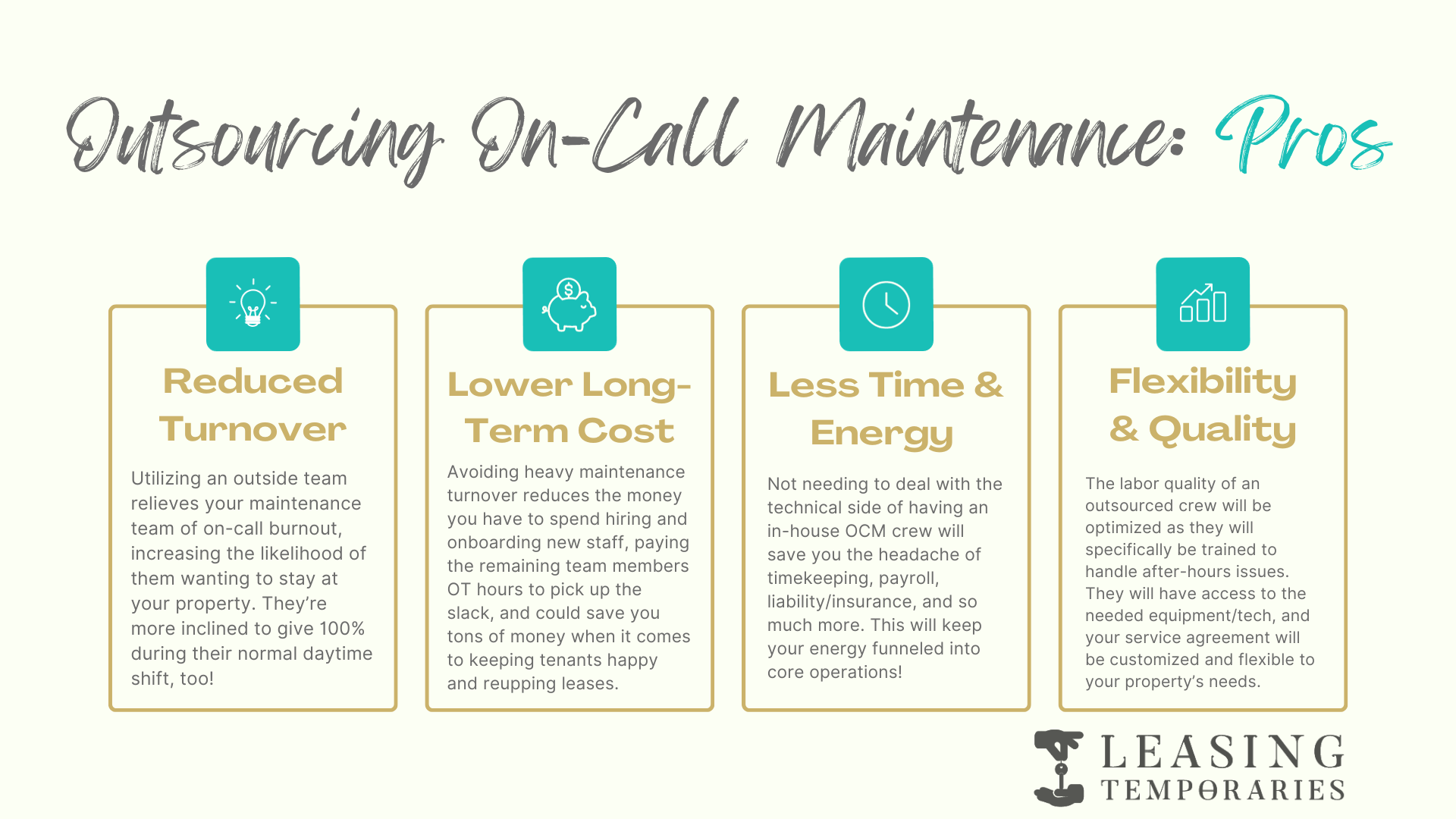
If it’s feasible within your budget, a lot of properties find success by utilizing an outside on-call maintenance crew or handyman service to handle after-hours calls. It eliminates the burden of being on-call for your techs, who are more than likely spending time with family after their regularly scheduled 8-10 hour workday, or asleep. This, in turn, is more likely to encourage these reliable staff members to stay with your team:
“Their maintenance staff absolutely loves it and the maintenance positions are no longer a revolving door.”
In an industry that has a maintenance turnover rate of 39.2%, allowing your onsite techs work-life balance is crucial. Remember, there’s a reason that this rate is higher than an any other multifamily position (the industry average is 32.7%!) You can avoid burnout by partnering with another business’s on-call crew. This company may provide you with the emergency services that they respond to, or work with you to customize services based on your property’s needs. Trying to anticipate every call is exhausting and counterproductive; let your outsourced team provide your tenants with what constitutes an emergency and what doesn’t.
Following the decision to outsource is the modality that calls are received. Do you use an after-hours call center? Do you pay your on-call tech a flat rate for being available to answer calls after regular service hours? Or do partner with your outsourced crew to take the calls and follow up with you after the situation is handled (hopefully when you’re awake!)? These are all things to take into consideration when strategizing your on-call model.
How much money would you save?
Let’s hash out the comparative value between what may seem to be an expensive on-call outsourcing budget with regards to the cost of heavy maintenance turnover:
So, your guys are exhausted and frustrated from being on-call, and they begin to slack during their normal hours: Turns aren’t being completed, curb appeal is dropping, they’re calling off, etc. How much is that costing you?
When they quit, you have to run more ads for hiring, pay your leftover guys OT rates to pick up their slack and unfinished projects, and spend more valuable time vetting and onboarding (we can help with that, BTW). How much is that costing you?
Your tenants are becoming frustrated with unanswered service requests due to the decline in your daytime staff. Vacancies are increasing as leases aren’t being reupped. How much is that costing you?
Not to say that turnover in general will vanish by relieving your team of on-call duties, but it will certainly give them a reason to want to stay.
A few other reasons to outsource (if you need more encouragement):
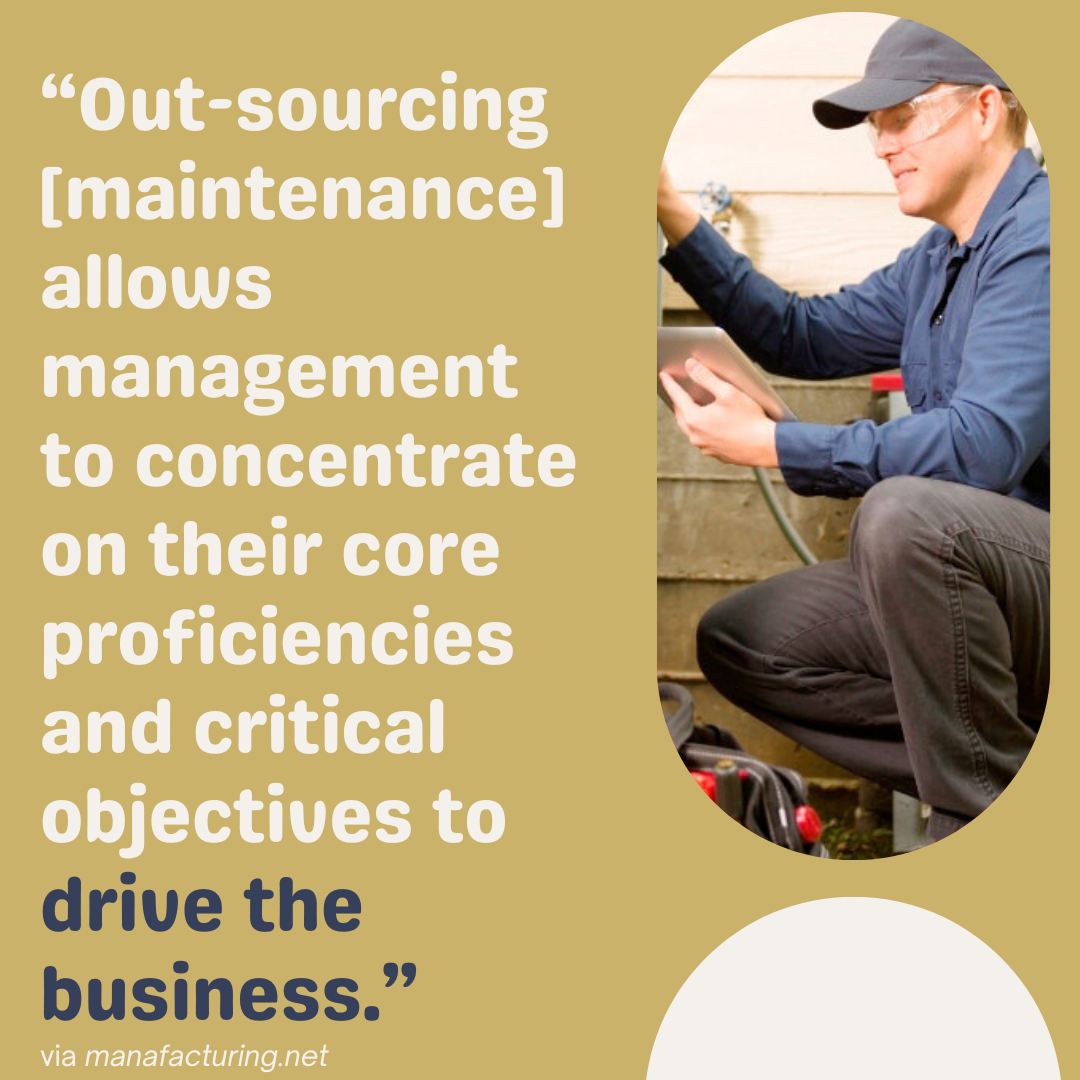
Flexibility & labor quality: We briefly discussed the valuable time and money you’d save by not needing to invest as much into vetting the proper OCM staffing skillsets. An outsourcer will have quality protocols in place for selecting and employing OCM staff that meet your property needs. This expertise “provides the flexibility to utilize specialized services as needed, instead of incurring the cost of developing in-house competencies that are not needed on a permanent or continuous basis” (Manafacturing.net)
No More Personnel Headaches: The outsourcing company is handling all that paperwork and time-consuming documentation; we’re talking HR, payroll, labor relations, 401K, PTO, etc. (If you’ve utilized temp staffing before, you definitely know how helpful it is). This also includes any disciplinary action and liability/insurance issues. The OCM employees will have their schedules, timesheets, and contracts reviewed with them so that they’ll be ready on Day 1 to assist your properties.
Equipment & Tech: The OCM staff provided to you will be trained in the newest and most necessary technologies required to handle emergency calls swiftly and efficiently, eradicating the need for your company to provide training to your in-house team (and the cost of acquisition of said equipment!)
Finally, perhaps the most important advantage of outsourcing is that this is one less thing on your shoulders. You’ll be able to funnel more of that much-needed energy into core business operations and effectivity, so that your property and its personnel can perform at its best.