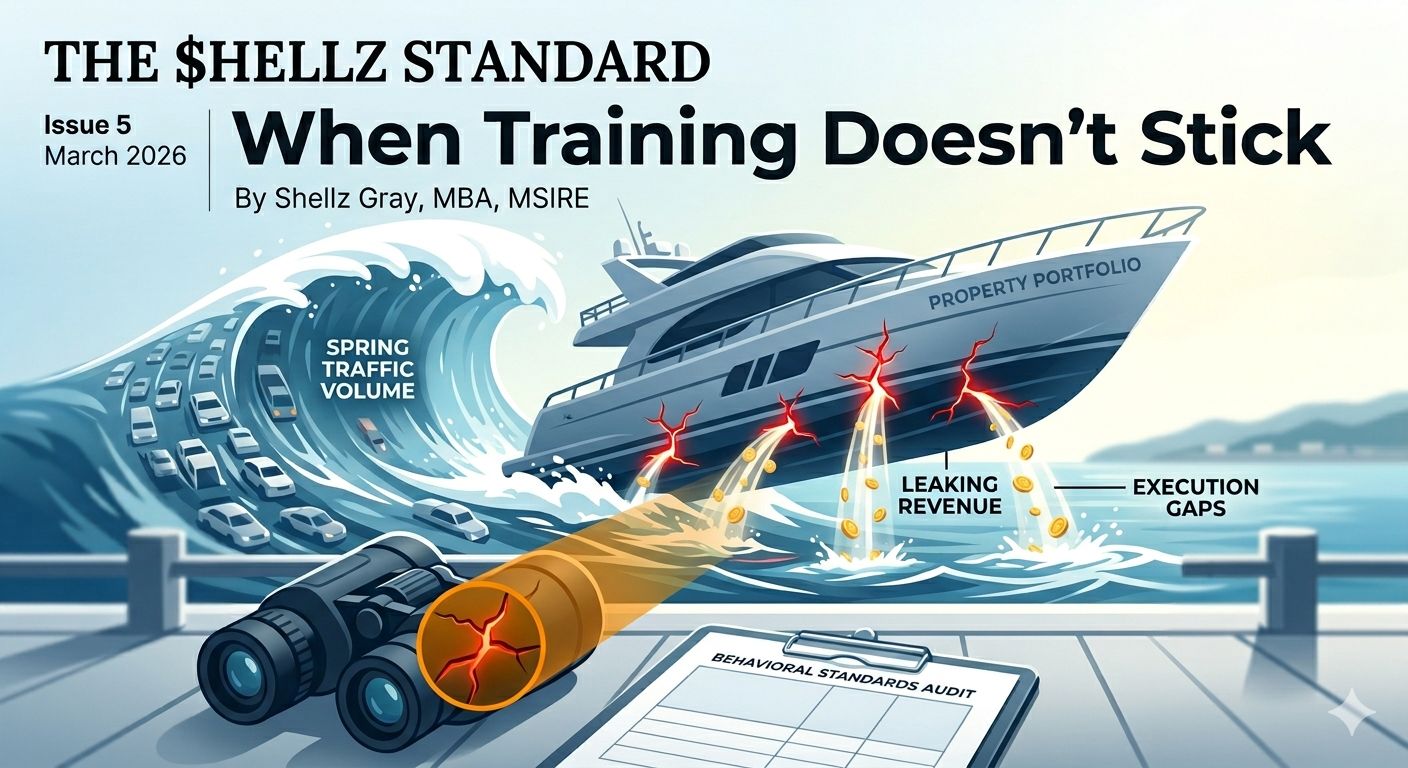

You Don't Have a Staffing Problem. You Have a Standards Problem.
Stop looking for unicorns. Start building the system.
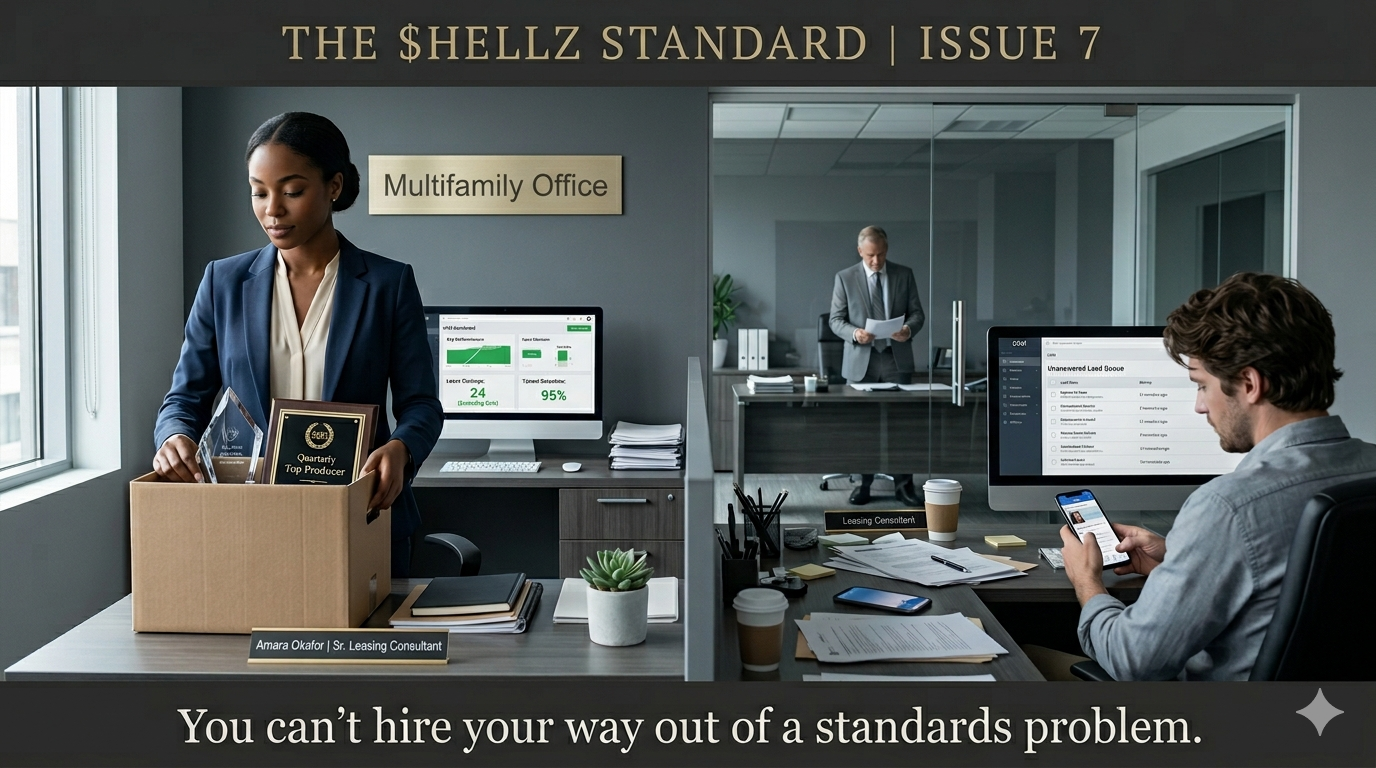
I've had four conversations in the last two weeks — two with operators, one with a regional, one with an ownership group — and every single one of them said the same thing: "We just can't find good people."
Spring leasing season is here. Traffic is up. And the first instinct at every company with an open desk is to post the job and pray the right person walks in.
It's the most agreed-upon statement in multifamily. And it's wrong.
You don't have a staffing problem. You have a standards problem disguised as a staffing problem. And the disguise is so good that the entire industry has agreed to stop looking underneath it.
Let me explain what I mean.
The Hiring Loop Nobody Talks About
Here's what actually happens at most properties:
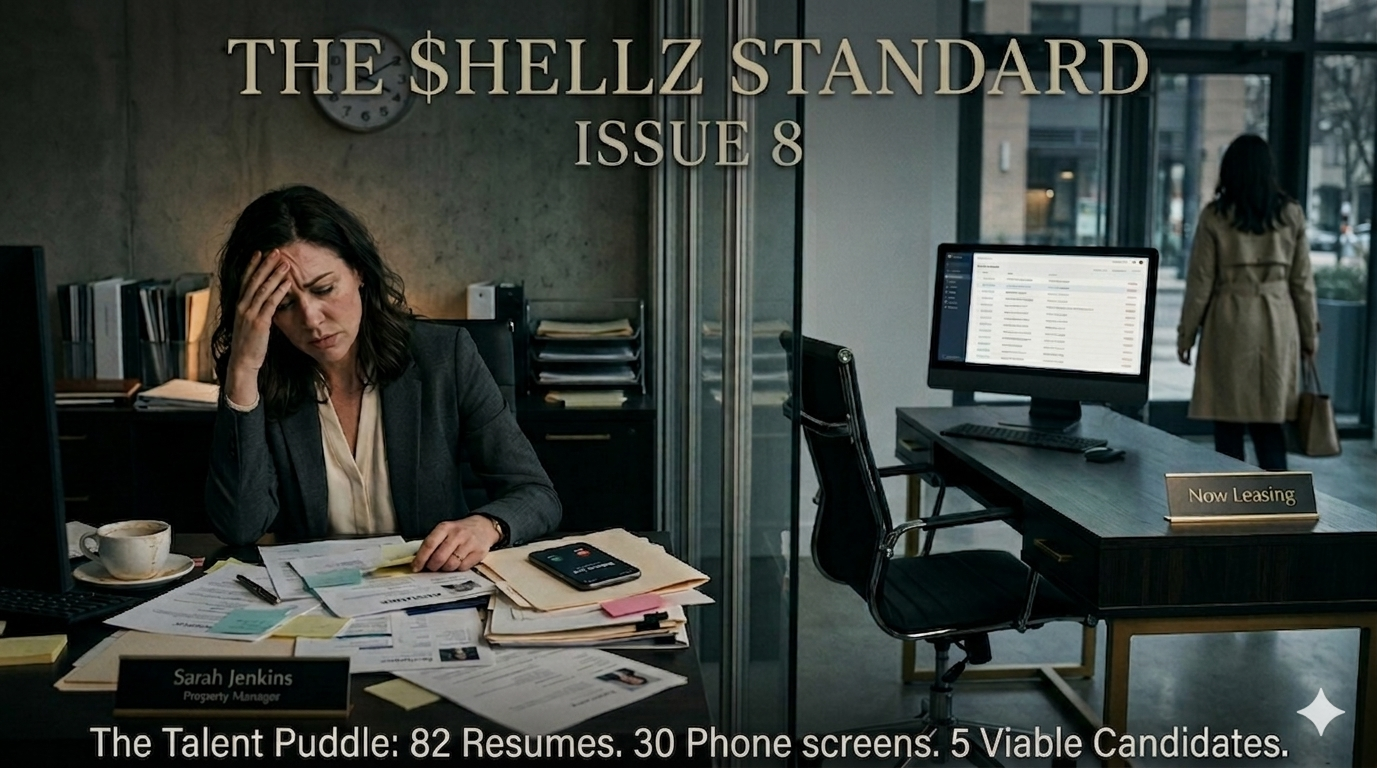
Someone quits. The manager panics. A job post goes up with the same generic description that's been copied and pasted since 2019. Whoever applies first and seems "nice enough" gets the job. There's no behavioral benchmark. No performance profile. No definition of what success looks like in the first 30 days. The new hire shadows someone for a week — usually the person whose habits are already drifting — and then gets handed a desk and a login.
Six months later, they're underperforming. Leadership says "we hired the wrong person." The cycle starts again.
But nobody ever asks the harder question: what were they supposed to perform against?
If you don't have a written, measurable standard for what a leasing professional is supposed to do every day — how they answer the phone, how fast they respond to a lead, how they run a tour, how they follow up, how they close — then you didn't hire the wrong person. You hired a person into a system that was never designed to make them successful.
That's not a staffing problem. That's a leadership problem.
"Good People" Is Not a Standard
When an operator says "we need good people," what they actually mean is "we need someone who figures it out on their own without us having to build anything."
That's not a hiring strategy. That's a prayer.
The best leasing professionals I've seen in 25 years weren't born closers. They were trained into systems that told them exactly what the standard was, measured them against it daily, and coached them when they drifted. The worst leasing professionals I've seen weren't bad people. They were decent people in environments with no guardrails, no accountability, and no definition of what "good" actually meant.
The difference between a Revenue Guardian and an Order-Taker is almost never talent. It's environment.
The Real Reason You Can't Keep People
Here's where this gets uncomfortable.
Your best people aren't leaving because the pay is bad. They're leaving because they're surrounded by people who aren't being held to the same standard — and leadership doesn't seem to notice or care.
When a high performer watches a low performer get the same paycheck, the same praise in the team meeting, and the same zero consequences month after month — they don't file a complaint. They update their resume.
You didn't lose them to a competitor. You lost them to your own tolerance for mediocrity. And then you posted the job again and called it a staffing problem.
What a Standards Problem Actually Costs
Let's do the math.
A leasing professional operating without a defined behavioral standard misses an average of 2–3 closeable leases per month. At $1,800 average rent, that's $43,200–$64,800 per seat per year in revenue that walks out the door. Not because the leads weren't there. Not because the market was soft. Because nobody told that agent what the standard was, measured whether they hit it, or coached them when they didn't.
Now multiply that across your portfolio. Five properties with two agents each? That's $432,000–$648,000 walking out the door every year. Ten properties? You're past a million. And every dollar of it gets blamed on "the market" or "the labor pool" instead of the system that was never built.
The Fix Isn't Hiring Better. It's Building the System That Makes Good Inevitable.
Stop looking for unicorns. Start building a system where average people produce above-average results because the standard is clear, the measurement is constant, and the coaching is structured.
That means a behavioral profile that defines what success looks like before you ever post the job. A diagnostic that measures the team you already have against that standard — so you know who's a guardian, who's developing, and who's in the wrong seat. A daily operating rhythm that reinforces the right habits and catches drift before it compounds. A training system built on repetition and practice, not modules and quizzes. An accountability structure where managers aren't just reporting numbers — they're auditing behaviors.
When the system is right, the people problem shrinks. Not because you found better people. Because you stopped depending on finding them.
The Question I'd Leave You With
If your best leasing professional quit tomorrow and you had to post the role — could you hand the new hire a document that says "this is exactly what we expect, this is how we measure it, and this is how we'll develop you"?
If the answer is no, you don't have a staffing problem.
You have a standards problem. And it's been costing you more than you think.
Next week: what happens when operators already know the standard is broken — and choose not to fix it anyway.
The $hellz Standard is written for operators who are willing to ask the harder questions.
About the Author
Shelly Gray, MBA, MSIRE is the Founder & CEO of Shellz Property Partners. She trains and staffs multifamily leasing teams — but unlike traditional training companies, she diagnoses first. After 25+ years in the industry, she built SRGOS™ around one belief: you can't fix what you haven't properly identified. Her work helps operators stop losing revenue to the leasing behaviors their dashboards never show them.