
Humans vs. AI: Are We Obsolete Yet?
Reviewing the Effects of AI in the General Workforce & Property Management
Are we obsolete yet?
The short answer? No, not yet.
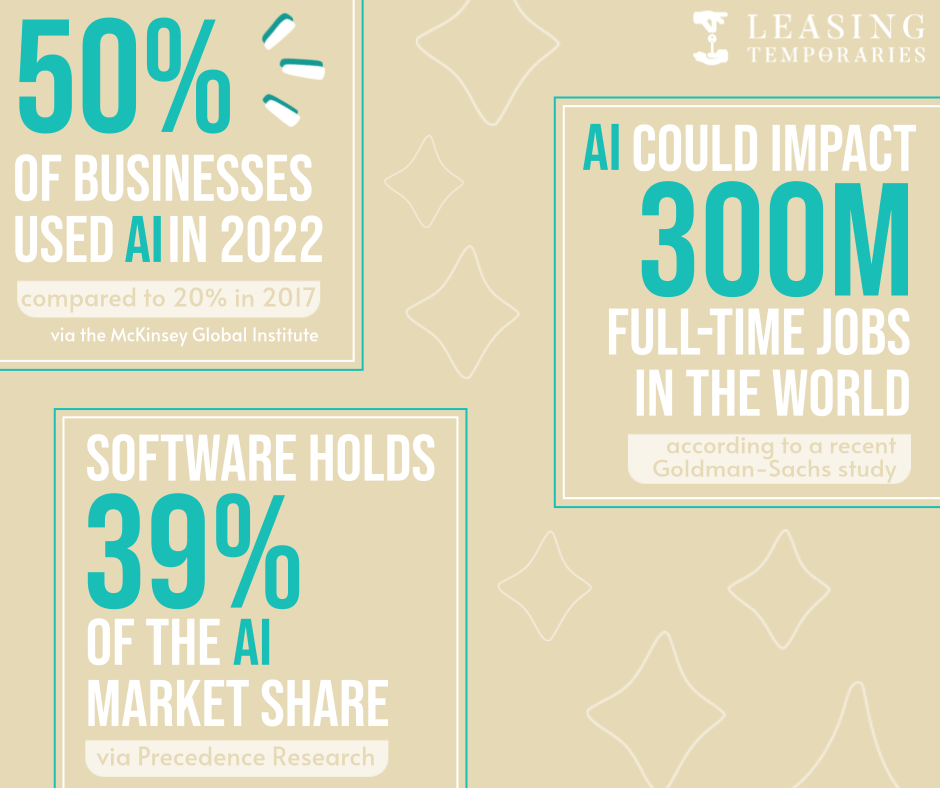
As we all know, AI has been on the rise in the workplace for the last several years. According to a 2022 global study by the McKinsey Global Institute, the adoption of AI for at least one business function has more than doubled since 2017. But what does this mean for the future of job security? Business Insider discusses how most experts agree that AI poses a threat to a handful of jobs, specifically white-collar positions: “It could do so by automating mid-career, mid-ability work.”
Most of the population is aware of what AI is, but what can it do? And what are the incentives for employers to replace employees with this technology? Anu Madgavkar, a partner at the MGI, reminds us that "We have to think about these things as productivity enhancing tools, as opposed to complete replacements.” However, it’s up to each individual business to decide how and at what capacity to integrate AI into their models.
A few pros (out of many) of AI for business models (via TechTarget)
- “Data-driven” decision making: AI’s ability to predict outcomes void of biases and human intuition, thereby coming to accurate conclusions, is highly favorable for a business model.
- Minimizing costs: AI’s ability to complete time-consuming and repetitive tasks at a much larger scale (beyond human capacity!) allows businesses to allocate their funds into more important departments and individuals.
- Reducing the risk of costly human errors: AI’s ability to improve upon its algorithms and take on tasks prone to administrative error can save businesses thousands of dollars. Not only is AI increasing the quality of the output, but it’s doing so at a pace unmatched by humans. BetterUp predicts that AI has the potential to “lower supply chain costs and drive a 7% increase in global GDP, with market opportunity worth an estimated $6 trillion over the next decade.”
What can’t be replaced by AI?
Due to the unpredictability of human behavior, AI can never fully replace our thinking and skillsets. According to the Department of Labor’s most recent data, soft skills can help us maintain our job security as they will remain in-demand for next ten years. For example:
- How we respond to challenges: Innovation, critical thinking, creative approaches to tasks
- Interpersonal relation: Think about it—what does a machine lack? BetterUp says “emotional intelligence, self-awareness, and conflict solution” (HR folks, your job security’s looking good!)
In addition, recall that we possess the ability to listen to our clients and coworkers, craft thoughtful responses, and use our nonverbal communication skills to effectively relate with other people. Thus, our cooperative skills will be in high demand. And, despite not being commonly associated with the employment field, empathy and emotional intelligence will elevate us above AI.
Here are five jobs that (probably) won’t be replaced by AI any time soon, based on data from the World Economic Forum:
- Agriculture: With a projected growth of 30% in the upcoming 5 years, this is not to say that agriculture roles aren’t utilizing upcoming technologies to enhance their output, but the physicality of the job safeguards it from automation and generative AI.
- Human Resources: Calling back to the need for human empathy, motivation, and emotional intelligence; AI is being developed to assist with eliminating some of the repetitive onboarding and hiring processes, but the need for a humane skillset persists.
- Medical roles: Undeniably reliant on the many advances in technology, the medical field still requires highly trained individuals who posse that desire to help others, good bedside manner, and the ability to quickly handle unpredictable circumstances.
- Psychiatrists/Psychologists: With increased awareness of the mental health crisis in our nation, the thought of a robot counseling something as fragile as an individual’s emotional wellbeing is not preferred. This is another employment field that depends heavily on humans’ empathy and critical thinking skills, which cannot yet be programmed.
- Creatives: Artists and writers have been vocalizing their resentment towards AI due to multiple interfaces being programmed to generate art, screenplays, and the like. However, AI lacks “creative complexity” and the ability to approach ideas with uniqueness and individuality.
Don’t fall into one of these categories? Don’t worry. Check out the U.S. Career Institute’s list of 65 Jobs With the Lowest Risk of Automation by Artificial Intelligence and Robots and don’t forget to sharpen up those soft skills!
What does this mean for Property Management?
Firstly, we can all agree that the need for a fast-acting and reliable maintenance team will outlast most if not all AI developments in the coming years. We will always need handymen, contractors, and the like due to their hand-eye coordination, problem solving skills, and adaptability. Physical labor like make-ready services and groundskeeping simply cannot be replaced. However, there is new technology that could help simplify a ton of property managers’ daily tasks, so that they can focus more on tenant satisfaction and retention.
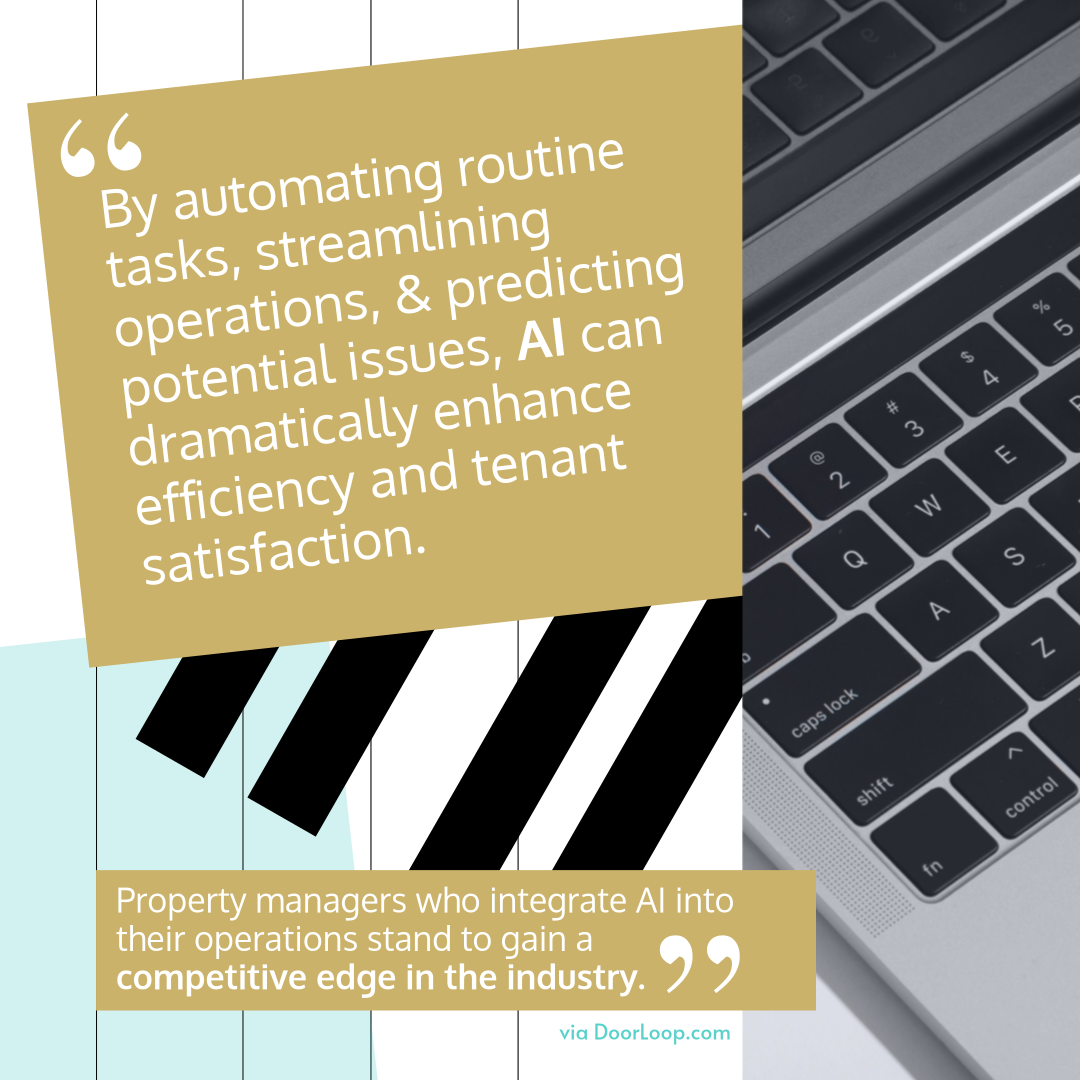
DoorLoop's article about AI in the P.M. industry lists the tasks that are benefiting from automation the most as following:
- Prospective tenant screening
- Rent collecting and optimization (researching market trends to set appropriate rent prices)
- Organizing lease agreements and paperwork
- Sending reminders about renewals
- Providing tenants with a one-stop “portal”
- Filling vacancies more efficiently by managing rental listings
- Utilizing chatbots for FAQ’s, scheduling showings and appointments, handling complaints, and maintenance requests
These few features (among many) are to be used in tandem with a property manager’s cheerful demeanor and skillset, not to replace it. Automation is being implemented to save time, reduce overhead, and predict tenant/property needs.
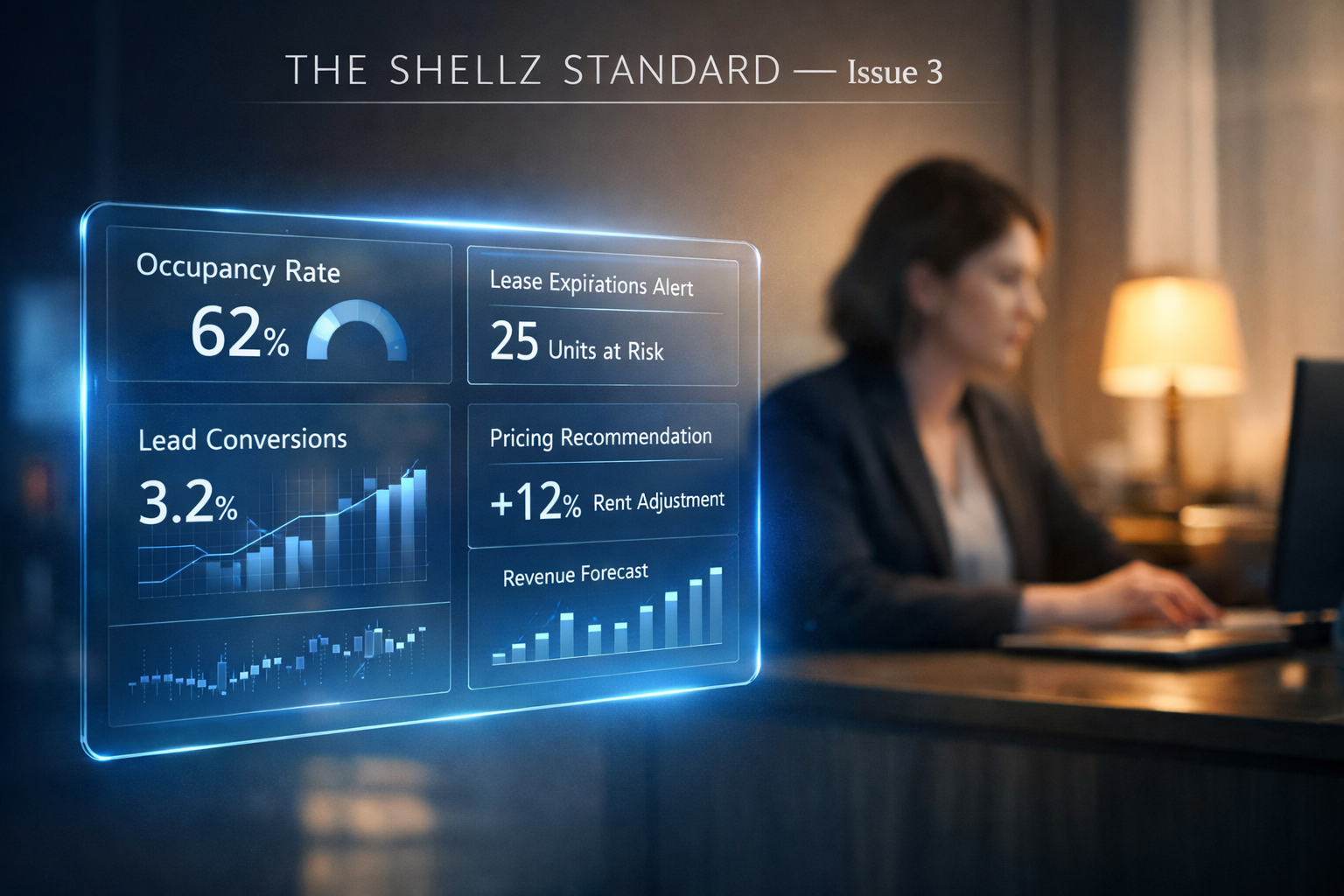
Those shopping for apartments are still expecting to be greeted by courteous and helpful leasing agents in your property’s lobby. However, we have seen an increase in properties utilizing AI Leasing Agents, such as the chatbots introduced by LeaseHawk: “If you’re looking for a cost-effective solution to ensure every prospect call, chat, and text is answered, then it’s time to look at a virtual leasing assistant.” Said to help with calls and voicemails when the physical leasing team is busy (lunch breaks, helping residents, after-hours), this AI can book tours, collect tenant/guest information, and ask pre-qualifying questions. However, it is described more as a helpful tool rather than an employee replacement option.
Property management in general has seen a surplus of emerging technologies and software to assist each individual role with the onslaught of tasks required daily, but the consensus from experts is that the industry’s security and workforce outlook remains firm.