The Spring Surge Illusion: More Traffic Doesn't Mean Better Performance.
Spring Is Where Excuses Go to Die.
Every March, the same conversation happens in owner meetings across the country.
Traffic is up. Tours are up. The phone is ringing again. And somewhere in the room, someone says it:
"See — we just needed the season to turn."
No. You needed the market to bail you out. There's a difference.
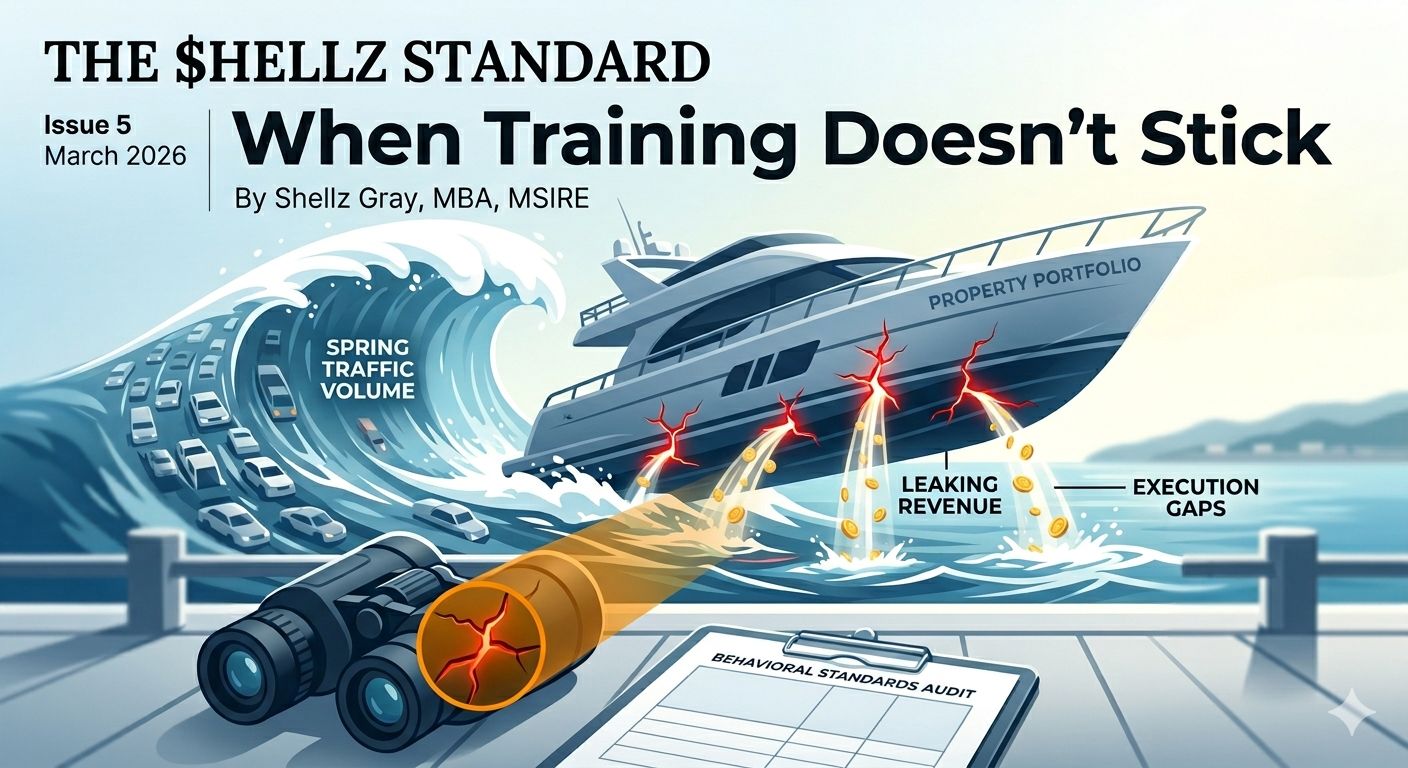
Spring doesn't fix broken operations. It hides them.
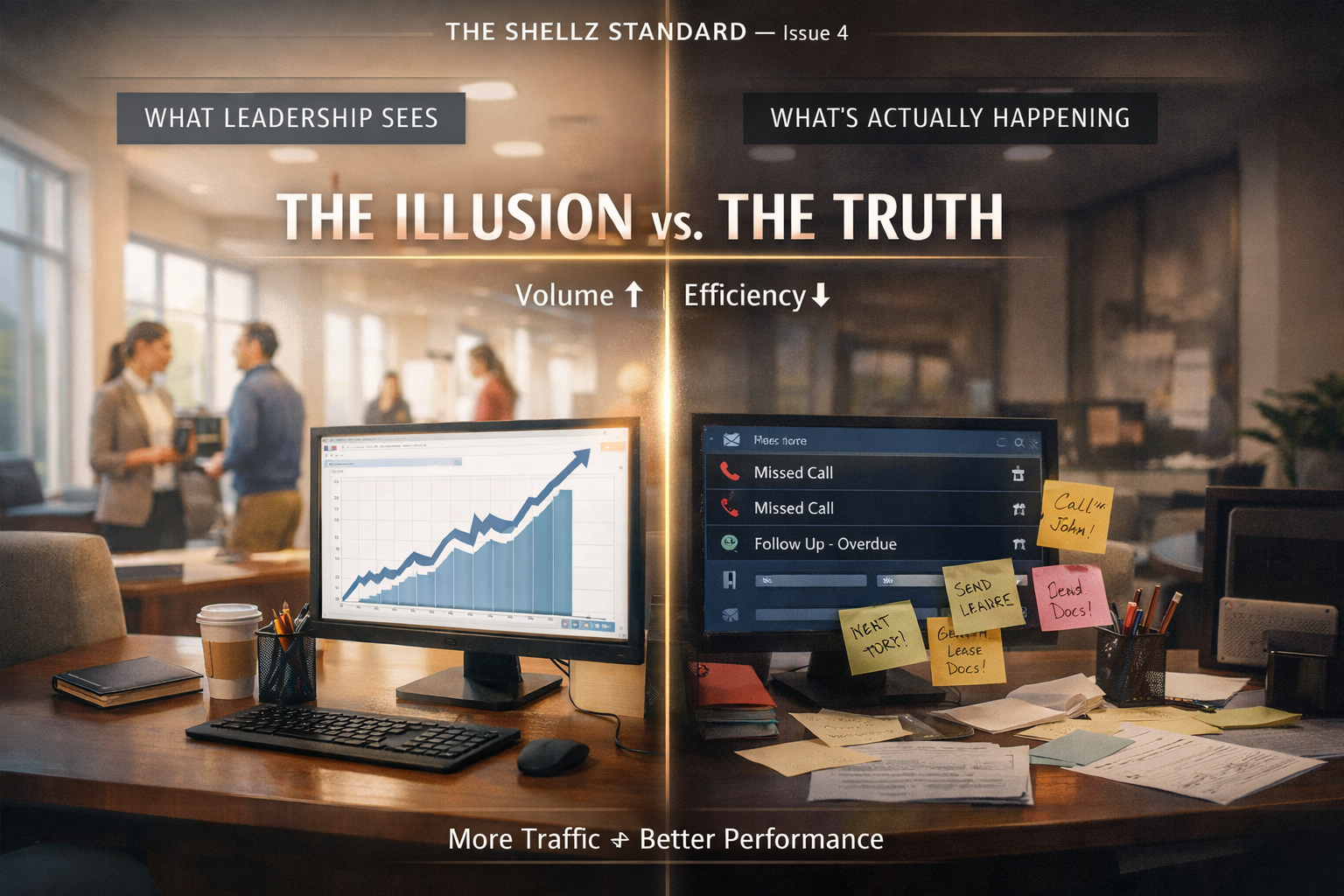
When lead volume doubles, weak conversion rates disappear inside better-looking totals. An agent closing at 18% didn't improve. She just doubled her at-bats. The leases went up. The skill didn't. And because nobody stripped out the volume, nobody saw it.
That's the illusion. Tours × volume = more leases — even when efficiency quietly dropped 20%. That 20% drop doesn't show up in the spring report. It shows up in your Q3 vacancy and your Q4 revenue story.
The False Confidence Loop
Spring creates a dangerous side effect: false competence.
Teams think they're improving because the numbers look better. Leadership thinks the system is working because occupancy is climbing. Both are reading volume as skill — and that misread is what costs portfolios the most in the back half of the year.
When the market is generous, weak operators look capable. When it tightens, they have no explanation for what changed — because they never understood what was driving the results in the first place.
The one question nobody asks in April:
Did your conversion rate improve — or did the market carry you?
Strip out the volume. Measure conversion per agent. Then look at show rate. Then look at follow-up quality. In that order.
That hierarchy tells you whether your team performed — or whether spring performed for them. If leadership can't answer it with data, the answer is already clear.
Spring is the annual stress test your operating system didn't study for.
In winter, every operational weakness was a drip. Low traffic, low stakes, low visibility. Nobody noticed the missed calls, the hollow tours, the follow-up that never came — because the volume wasn't there to expose it.
Spring turns the volume up. Every weakness is now a high-velocity leak running at full speed in front of prospects who have options. A drip in January becomes a flood in March — eroding NOI quietly, consistently, before leadership realizes the bucket is empty.
This is where you see the difference between teams with a real operating rhythm and teams improvising their way through the day. Structure protects revenue. Volume just reveals who has it and who doesn't.
What spring actually predicts.
Spring doesn't just reveal current performance. It forecasts your summer vacancy, your fall renewal risk, and your Q4 revenue story.
If conversion is soft now, you're not catching up in July. If your agents need volume to hit their numbers today, they'll be fully exposed the moment that volume pulls back. The operators who diagnose honestly in spring are the ones who protect revenue in Q3 and Q4. The ones who celebrate the surge spend fall asking what happened.
The leadership accountability layer.
If leadership only measures success when the market is generous, they're not leading — they're reacting.
Spring exposes whether you built a system or whether you've been relying on seasonal luck. The teams performing consistently — in spring, in summer, in Q4 — aren't luckier. They have an operating rhythm that doesn't depend on the market to make them look good.
Traffic is not a strategy. Seasonality is not a plan. Spring will always bring leads.
Only leadership can bring performance.
Spring is where excuses go to die. For operators willing to look honestly at the numbers behind the numbers — it's also where the real work begins.
About the Author
Shelly Gray, MBA, MSIRE is the founder and CEO of Shellz Property Partners. She trains and staffs multifamily leasing teams — but unlike traditional training companies, she diagnoses first. After 25+ years in the industry, she built Revenue Guard OS™ around one belief: you can't fix what you haven't properly identified. Her work helps operators stop losing revenue to the leasing behaviors their dashboards never show them.
The Shellz Standard is written for operators who are willing to ask the harder questions.