
Your Concession Problem Isn’t a Market Problem
Why Behavioral Concessions Are Costing Multifamily Portfolios More Than the Market Ever Did
By Shellz Gray, MBA, MSIRE | March 2026
Concessions are climbing. Everyone knows it. Every earnings call, every owner meeting, every budget review — the same conversation: “The market is forcing our hand. New supply is flooding in. We have to compete.”
And in some markets, that’s true. New deliveries are creating real pricing pressure. There are submarkets where a concession strategy is a legitimate competitive response to absorption timelines and lease‑up velocity.
But that’s not what’s happening at most stabilized properties. What’s happening at most stabilized properties is something nobody wants to say out loud:
Your leasing teams are giving away rent because they don’t know how to close without it.
The Concession Reflex
Watch what happens when a prospect hesitates. Not objects — hesitates. They pause. They say “let me think about it.” They mention they’re looking at one more property. They ask about move‑in specials.
In a well‑trained leasing operation, that moment is a discovery opportunity. What’s driving the hesitation? Is it price, timing, a competing option, an unresolved concern about the unit, the neighborhood, the commute? The agent’s job is to find the real reason and address it.
In most leasing offices, that moment triggers a reflex. The agent turns to concessions before they’ve even asked a question.
- “Let me see what I can do on the move‑in cost.”
- “I think we have a special running this month.”
- “Let me check with my manager about waiving the admin fee.”
The prospect didn’t ask for a discount. They hesitated. And the leasing professional interpreted hesitation as a price objection because they weren’t trained to interpret it as anything else.
That’s not a market‑driven concession. That’s a behavioral concession. And the distinction matters because one of them you can’t control — and the other one you can eliminate tomorrow.
The Math Nobody Is Running
Here’s what makes behavioral concessions so dangerous: they don’t look like a problem on a summary report.
A regional manager reviewing monthly numbers sees concessions as a line item. Total concessions granted: $14,000. They compare it to last month, compare it to the submarket, and if it’s in range, it gets filed under “cost of doing business in this market.”
Nobody is asking the next question: How many of those concessions were necessary?
If a property grants 10 concessions in a month and 6 of them were triggered by agent behavior — not market pressure — that’s 6 leases where the full rent was achievable and wasn’t captured. At $1,600 average rent with one month free, that’s $9,600 in revenue surrendered. Not lost to the market. Surrendered at the desk.
Multiply that across a portfolio. Five properties doing the same thing. Ten properties. Twenty. The number gets uncomfortable fast.
And here’s the part that should keep an asset manager up at night: concessions don’t just cost you the month you gave away. They reset the resident’s value perception. That resident now anchors to the discounted rate. When renewal time comes, any increase feels like a penalty rather than a market adjustment.
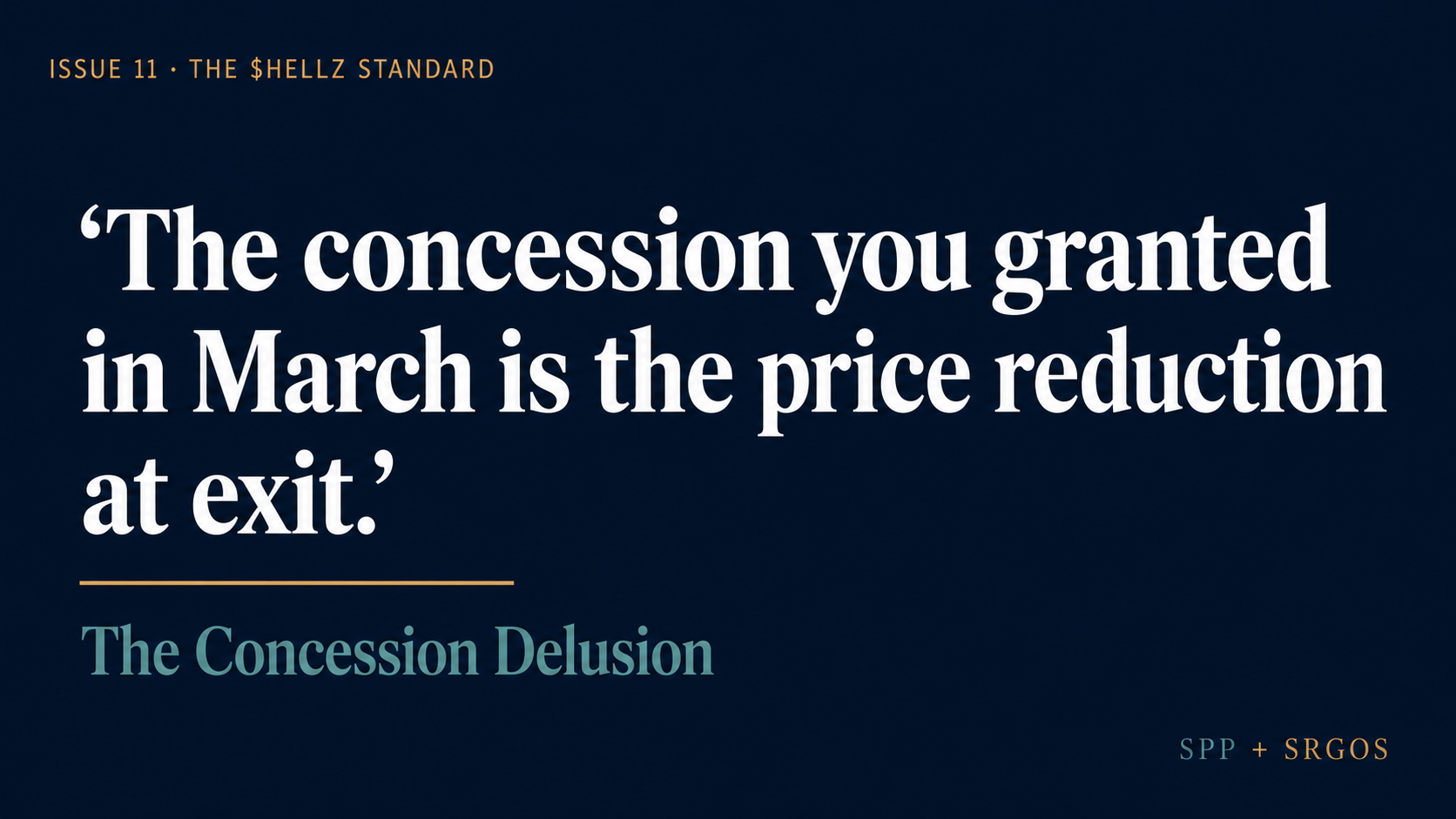
The concession you gave to close the lease in March becomes the retention problem you’re solving in February.
One behavioral concession creates two revenue events: the discount today and the renewal resistance twelve months from now.
“But My Market Requires Concessions”
Some of it does. Let’s be honest about that.
If you’re in a submarket with 2,000 new units delivering this year and your property is a 2019 build competing against 2025 finishes, you may need a concession strategy. That’s market math. That’s real.
But here’s the test most operators aren’t running: compare the concession rate between agents at the same property, on the same floor plan, in the same month.
If Agent A is closing 70% of their leases at full rate and Agent B is conceding on 60% of theirs, the market didn’t change between Tuesday and Thursday. The behavior did.
Same leads. Same units. Same pricing. Different outcomes. That’s not a market problem. That’s a person problem. And it’s identifiable if you’re willing to look at the data at the individual level instead of the property level.
Most operators don’t. They look at the building’s concession rate, compare it to the comp set, and conclude the market is the market. Meanwhile, one agent is protecting $19,200 in annual lease value per signing and the other is giving away $1,600 of it because they flinched when the prospect paused.
The Order You Present Information Matters More Than the Incentive You Offer
This is the behavioral piece nobody is teaching.
When a prospect asks “what are your specials?” most leasing professionals answer the question directly. They lead with the incentive: “We’re offering one month free on a 13‑month lease.” The prospect hears the discount before they’ve heard the value. The concession becomes the anchor for the entire conversation.
Now reverse it.
A prospect asks the same question. Instead of leading with the concession, the agent leads with the product: “Let me show you what you’re getting first, because it matters more than any promotion we’re running.” They walk the unit. They connect the prospect’s specific needs — the commute, the dog park, the in‑unit laundry — to the specific features. They build the value case. Then, only if needed, they introduce the incentive as a bonus, not a reason to sign.
Same unit. Same prospect. Same concession available. Completely different framing.
The order is: Product first. Value math second. Incentive third — only if the first two didn’t finish the job.
Most leasing teams have it inverted. They lead with the incentive because it’s easy, it’s fast, and it avoids the discomfort of having to actually sell. That inversion is costing portfolios thousands of dollars per unit per year.
Managers Are Approving the Problem
This is where it gets structural.
In most multifamily operations, concessions require manager approval. The agent goes to the manager and says “the prospect wants to know about specials” or “they’re comparing us to the new build down the street” or “I think we need to offer something to close this.”
And the manager approves it. Almost every time. Because the manager is being measured on occupancy, not on concession quality. Their job is to fill units. If an agent says they need a concession to close, the path of least resistance is to approve it and move on.
Nobody is asking: “What did you do before you got to the concession? What questions did you ask? What objection did the prospect actually raise? Did you present the value before you presented the discount?”
If the answer is “I don’t know” or “they just asked about specials,” then the manager just approved a revenue surrender without any evidence it was necessary.
The concession approval process in most operations is a rubber stamp. It exists to track what was given, not to evaluate whether it should have been given. The governance layer is missing.
What a Concession Audit Actually Reveals
When you pull concession data at the individual level — not the property level, not the portfolio level, but the person level — patterns emerge fast.
You find agents who concede on 70% of their leases and agents who concede on 20%, working the same property. You find agents who default to “one month free” on every application regardless of prospect behavior. You find agents who have never once attempted to close at full rate before offering an incentive.
You also find agents who almost never concede. They’re not withholding — they’re selling. They build value early, ask better questions, address hesitation before it becomes an objection, and present pricing with confidence. They make the prospect feel like they’re getting a deal at full rate because the conversation made the value feel real.
Those agents aren’t more talented. They have better habits. And habits are trainable if you know which ones are broken.
The Bottom Line
Concessions are not inherently bad. Used strategically, in the right market conditions, as a response to genuine competitive pressure, they’re a valid tool.
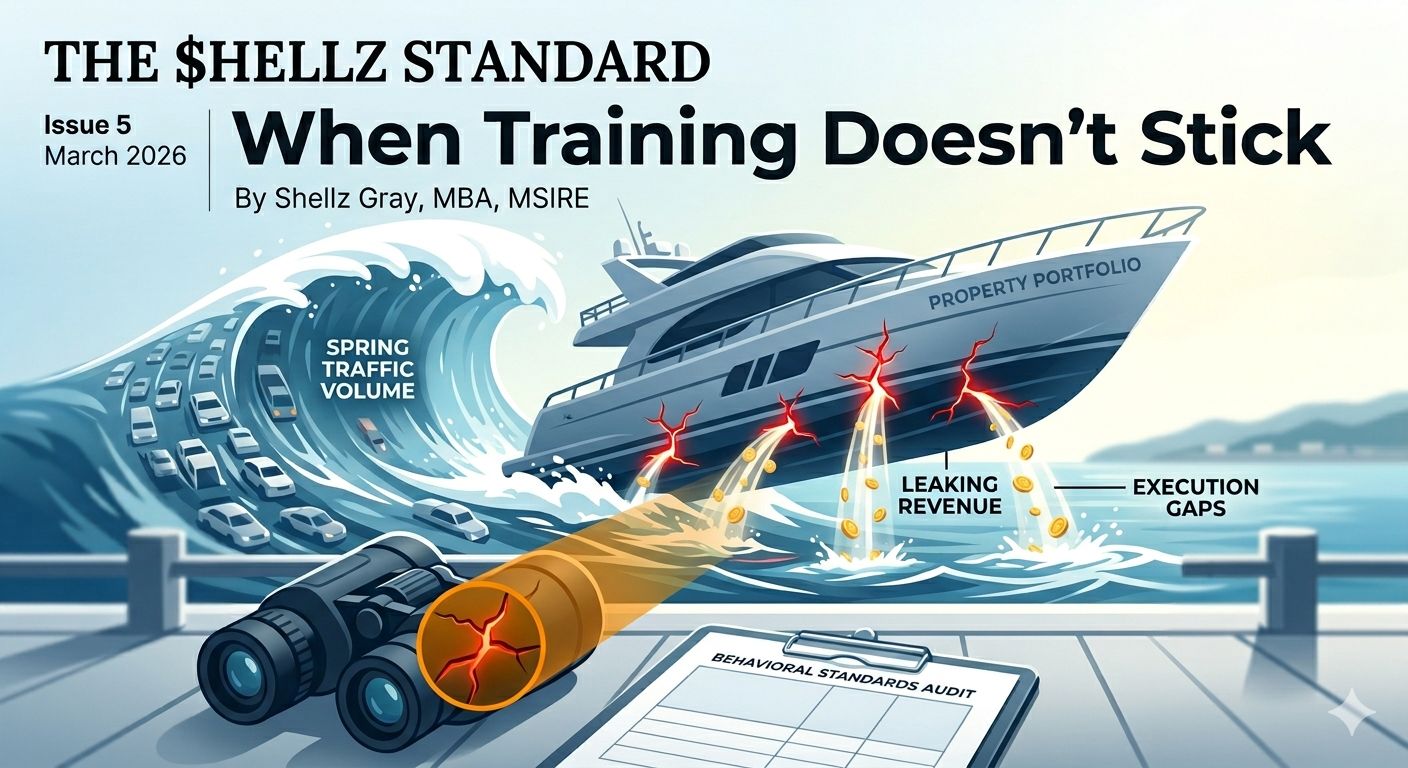
But when concessions become the default closing mechanism — when agents reach for the discount before they reach for a question — your portfolio is leaking revenue that has nothing to do with the market and everything to do with behavior.
The market didn’t teach your team to give away rent. The absence of a behavioral standard did.
And unlike the market, that’s something you can fix.
Until you separate market‑driven concessions from behavior‑driven concessions, you’re not managing revenue — you’re surrendering it.
About the Author
Shelly Gray is the founder and CEO of Shellz Property Partners, a behavioral revenue diagnostics firm serving the multifamily industry nationwide. With 25+ years in multifamily real estate and an MBA/MSIRE, she created Revenue Guard OS™ to identify and resolve the human performance gaps that cause revenue leaks in property management portfolios